The Light Within
Magic vs Spirituality: Are They Really the Same?
Jul
Magic vs spirituality is a question many people ask because the two are often presented as if they mean the same thing. Both may involve intention, ritual, symbolism, prayer, energy, or a relationship with the unseen. However, they do not always serve the same purpose or describe the same kind of inner experience.
Magic is often associated with directing intention toward a desired outcome. Spirituality usually focuses more on meaning, connection, consciousness, personal growth, or a relationship with something greater than the individual self.
In practice, the two paths may overlap. A spiritual person may use ritual, while someone who practices magic may also follow a deeply spiritual path. Understanding the difference can help you approach both with greater clarity, respect, and intention.
Magic vs Spirituality: The Basic Difference
The clearest distinction between magic vs spirituality often comes down to focus.
Magic commonly involves working with intention, symbolism, ritual actions, natural elements, timing, or sacred objects to influence an experience or support a specific goal.
Spirituality is usually broader. It may involve exploring purpose, developing self-awareness, connecting with the divine, deepening compassion, or understanding your place within life.
One path often asks, “How can I direct energy toward this intention?”
The other may ask, “What is this experience teaching me about myself, life, or the sacred?”
Neither question is automatically better than the other. They simply reflect different orientations.
What Is Magic?
Magic has been understood in many different ways across cultures, religions, and historical periods. In a general spiritual context, it often refers to the intentional use of ritual, symbols, words, objects, timing, or focused consciousness.
Practices associated with magic may include:
- Lighting candles for a specific intention.
- Working with herbs, oils, crystals, or sacred objects.
- Creating sigils or written petitions.
- Following lunar or astrological timing.
- Using spoken affirmations, prayers, or invocations.
- Building a ritual around protection, release, prosperity, or healing.
For some people, magic is understood literally as a way of influencing subtle forces. Others view it psychologically, seeing ritual as a method for focusing the mind, strengthening commitment, and creating symbolic change.
Both interpretations can exist within modern spiritual practice.
What Is Spirituality?
Spirituality is a much wider concept. It may or may not include formal religion, ritual tools, or magical practices.
At its core, spirituality often relates to meaning, connection, awareness, and the search for a deeper understanding of life.
A spiritual path may include:
- Meditation or contemplation.
- Prayer or devotional practice.
- Reflection on personal values.
- Connection with nature.
- Compassionate service.
- Study of sacred traditions.
- Inner healing and self-awareness.
Someone can be deeply spiritual without practicing magic. In the same way, a person may perform magical rituals without pursuing emotional growth or a broader spiritual philosophy.
Where Magic and Spirituality Overlap
Although they are not identical, magic and spirituality frequently meet in the same space.
Both may involve intention, reverence, symbolism, sacred timing, and a desire to connect with realities that are not always visible or measurable.
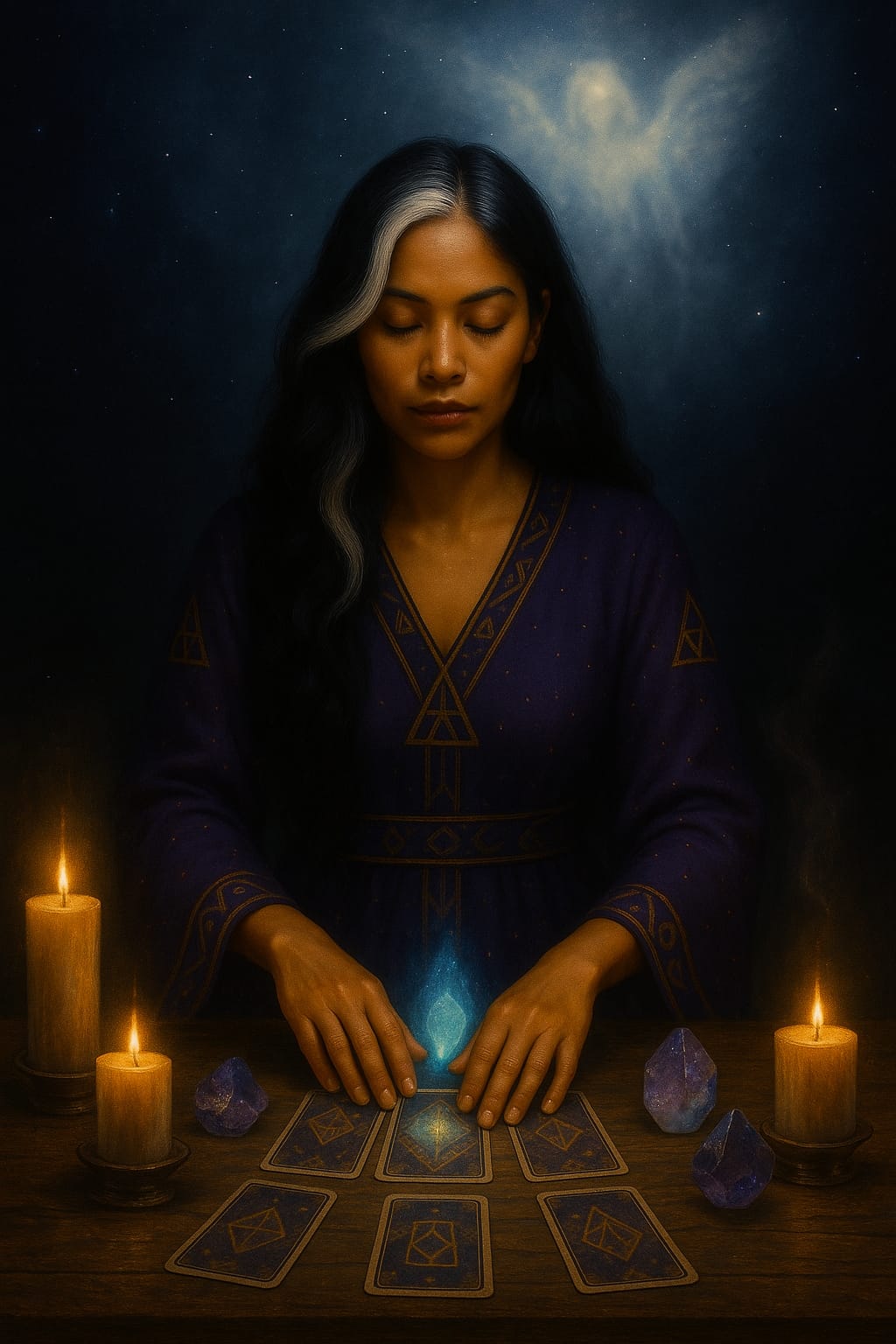
A candle ritual, for example, can be magical because it focuses intention toward a goal. The same ritual can also be spiritual if it creates a moment of prayer, reflection, surrender, or inner connection.
The action may look identical from the outside, while the meaning behind it is completely different.
This is one reason discussions about magic vs spirituality can become confusing. The tools may be similar, but the purpose behind them may not be.
Intention Changes the Meaning of a Ritual
A ritual does not define itself. Intention gives it direction.
Consider two people lighting the same white candle.
One person may light it while asking for peace, guidance, and emotional clarity. Another may use it as part of a structured ritual intended to attract a specific opportunity.
The object remains the same, yet the purpose changes the experience.
This distinction is important because spiritual tools do not automatically make a practice spiritual. Their meaning depends on how they are used, what the person believes, and what kind of relationship they create with the practice.
Is Manifestation Magic or Spirituality?
Manifestation often sits between both worlds.
When manifestation focuses on directing thoughts, rituals, symbols, or energy toward a specific result, it may resemble magic.
When the practice includes self-awareness, trust, alignment, personal responsibility, and reflection on whether the desire is genuinely meaningful, it may become part of a spiritual path.
The difference is not always found in the technique. It is often found in the depth of the process.
Manifestation becomes shallow when it is reduced to demanding outcomes without examining behavior, beliefs, timing, or consequences.
A more grounded approach asks not only, “How do I receive this?” but also, “Who am I becoming while pursuing it?”
Can Magic Exist Without Spiritual Growth?
Yes. A person can perform rituals, collect spiritual objects, follow lunar cycles, and learn symbolic techniques without becoming more compassionate, self-aware, or responsible.
External practice does not automatically create inner transformation.
Magic may help someone focus an intention, but it cannot guarantee emotional maturity. A ritual can support change, yet it does not replace honest reflection or conscious action.
This is similar to owning exercise equipment without developing a consistent relationship with movement. The tool has potential, but the result depends on how it is used.
Can Spirituality Exist Without Magic?
Absolutely.
Many spiritual traditions focus on prayer, meditation, ethics, service, contemplation, surrender, or devotion without including magical practices.
A person may experience deep spiritual connection while walking in nature, caring for family, studying sacred teachings, or sitting quietly in reflection.
No special object is required for spirituality to be meaningful.
Tools can support a practice, but they are not the source of spiritual depth.
Why People Often Confuse the Two
Modern social media frequently blends magic, spirituality, astrology, manifestation, wellness, and personal development into one visual category.
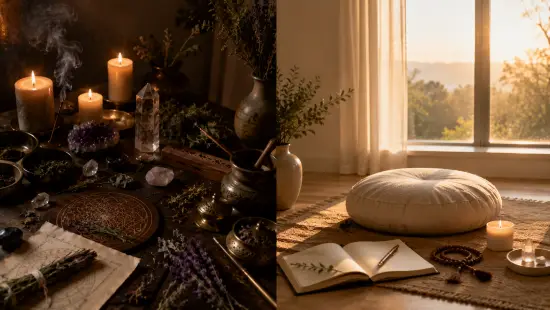
Crystals, candles, incense, tarot cards, journals, herbs, and meditation spaces may all appear together, making the practices seem interchangeable.
Online content also tends to simplify complex traditions into short, attractive messages. As a result, people may assume that every ritual is spiritual or that every spiritual practice is a form of magic.
The reality is more nuanced.
Different cultures and traditions define these words in different ways. Personal beliefs also shape how each person understands them.
Magic vs Spirituality in Daily Life
The difference becomes clearer when we look at everyday examples.
A Protection Practice
A magical approach may involve preparing an oil, creating a sigil, lighting a candle, or placing protective herbs around a space.
A spiritual approach may include prayer, strengthening boundaries, examining fear, and asking what greater awareness is needed.
A complete personal practice can include both: symbolic protection and practical self-awareness.
A Prosperity Practice
Magic may focus on attracting clients, opportunities, income, or resources through ritual intention.
Spirituality may explore worthiness, generosity, purpose, responsibility, and the emotional relationship with money.
Combining both can create a more grounded process when ritual is supported by conscious action.
A Release Ritual
A magical practice may use fire, water, herbs, or written words to symbolize letting go.
The spiritual work begins when the person also reflects on attachment, forgiveness, boundaries, and what must change after the ritual ends.
Spiritual Tools Are Not Automatically Magical
Crystals, oils, sprays, herbs, candles, salts, and sacred objects can be used in many ways.
Some people use them as magical tools intended to direct energy. Others use the same objects as reminders, sensory anchors, devotional symbols, or supports for meditation.
At Oma’s Sacred Tools by MJ, spiritual tools are approached as companions for intentional practice. Their purpose is not to replace personal responsibility, but to help create moments of focus, reflection, and conscious connection.
This philosophy is also part of The Oma’s Sacred Method™, where ritual, self-awareness, and personalized spiritual guidance work together rather than functioning as isolated techniques.
How to Know Which Path You Are Practicing
You do not always need to place yourself into a strict category. Still, a few questions can help clarify your approach:
- Am I trying to direct an outcome or understand myself more deeply?
- Does this practice increase awareness or only promise results?
- Am I using ritual as support or expecting it to do everything for me?
- Does my practice help me act with more clarity and responsibility?
- Am I connecting with something sacred or mainly seeking control?
- What changes after the ritual is complete?
Your answers may reveal that your practice includes both magic and spirituality.
That overlap is not necessarily a contradiction. It can become a balanced path when intention, ethics, awareness, and action remain connected.
Ethics Matter in Both Practices
Whether a person identifies with magic, spirituality, or both, ethical reflection matters.
A practice should not become an excuse to manipulate others, avoid responsibility, or make harmful claims.
Grounded spiritual work respects personal choice, cultural context, and the limits of what any ritual or tool can promise.
It is also important to avoid using spiritual explanations to replace appropriate medical, legal, financial, or psychological support.
The University of Minnesota offers a broader educational overview of spirituality, purpose, connection, and well-being, showing that spiritual life can include many forms of meaning and practice.
Final Thoughts on Magic vs Spirituality
Magic vs spirituality is not always a choice between two completely separate paths.
Magic often focuses on intention, ritual, symbolism, and desired change. Spirituality usually reaches toward meaning, connection, awareness, and inner transformation.
Sometimes they remain separate. In other cases, they become part of the same personal practice.
The most important question is not which label looks more impressive. A better question is whether the practice helps you become more conscious, grounded, compassionate, and responsible.
Ritual can create a sacred doorway, but awareness determines what happens after you walk through it.
Continue exploring: Visit The Oma’s Sacred Method™ to discover a personalized approach to spiritual awareness, intentional ritual, and sacred tools.